Recognizing the Signs Your Bong Needs a Bath
Let's be real. That beautiful piece of glass art you once cherished is starting to look less like a smoking accessory and more like a forgotten science experiment from a mad botanist's lab. Ignoring the signs of a dirty bong doesn't just look bad; it actively tanks your smoking experience and can be pretty unhealthy.
If you even have to ask yourself if it's time for a scrub, the answer is almost certainly a resounding "YUP." We've all let a cleaning day slide, but when the water looks like a swamp beast may be lurking within, your bong is sending out an S.O.S. (Save Our Smoke).
The Taste Test No One Wants to Take
One of the first casualties of a dirty bong? Flavor.
Fresh, quality herbs have an amazing profile of terpenes that gives them that unique taste and smell. A gunked-up bong completely assassinates it. Instead of tasting the sweet, earthy notes of your herbs, you get a harsh, ashy mouthful of old tar and resin. A clean piece lets you taste your herb, not the ghosts of sessions past.
When Your Bong Becomes a Petri Dish
Beyond the nasty taste, a dirty bong is a five-star resort for mold and bacteria. The mix of stagnant water and leftover plant matter is an open invitation for all sorts of microscopic nasties to move in and throw a party. Every time you take a hit, you could be pulling those contaminants straight into your lungs.
A clean bong isn't just about looks or flavor—it's essential for a healthier, more enjoyable session. Cleaning your piece regularly gets rid of harmful buildup, making sure every hit is as smooth and pure as it should be.
-Abongham Blinkin
This isn't just herbal paranoia; it’s basic hygiene. People are more aware of sanitation than ever. The global market for drain cleaners and disinfectants was valued at over USD 2 billion in 2022, which just goes to show how seriously people are taking household cleanliness. That same mindset should absolutely apply to your smoking gear.
For anyone new to the game, understanding what is a bong and how all its parts work will really drive home why keeping those percolators and chambers clean is so important. A filtration tool simply can't do its job when it's clogged with yesterday's gunk.
The Tale of Two Bongs: Dirty vs Squeaky Clean
To really see what a difference a good cleaning makes, let's put the two experiences side-by-side. It’s not just about looks—it’s about the quality of your session from start to finish.
| Feature | The Dirty Bong Experience | The Squeaky Clean Bong Experience |
|---|---|---|
| Flavor Profile | Harsh, ashy, and tastes like stale resin. Masks the true flavor of your herb. | Pure, clean, and allows the full terpene profile of your flower to shine through. |
| Smoothness of Hit | Rough and irritating on the throat and lungs due to inhaling burnt residue and contaminants. | Silky smooth and cool, as the water can properly filter and cool the smoke. |
| Visual Appeal | Murky, brown-stained glass with visible resin chunks. Let's be real, it's just gross. | Crystal-clear glass that showcases the bubbling action. A piece you can be proud of. |
| Hygiene & Health | A potential breeding ground for bacteria, mold, and other unwanted microorganisms. | A clean, sterile environment that minimizes the risk of inhaling harmful contaminants. |
The takeaway is clear: keeping your bong clean is a total game-changer. It transforms a harsh, grimy process into the smooth, flavorful, and altogether better experience it’s meant to be.
Putting Together Your Bong Cleaning Toolkit
Before you can get your piece sparkling like new, you’ve got to gather your gear. Think of this as your prep station. Having everything you need within arm's reach is the secret to turning a dreaded chore into a quick, satisfying task.
You wouldn't try to scrub a greasy pan with just a paper towel and a stern look, would you? The same logic applies here. Going after caked-on resin with just dish soap and a prayer is a surefire way to get frustrated. Let's get you properly armed for the job.
The Gold Standard: Isopropyl Alcohol and Salt
This is the go-to method for a reason. It's cheap, brutally effective, and you can find the ingredients almost anywhere. This combo is the dynamic duo of bong cleaning; the alcohol dissolves the sticky gunk while the salt scrubs it all away.
Here’s what you’ll need to pull off this classic technique:
-
Isopropyl Alcohol (91% or higher): This is your heavy lifter. The higher the percentage, the faster it will cut through stubborn resin. Anything under 91% has too much water and just won't be as effective, leaving you with a half-cleaned mess.
-
Coarse Salt: Grab some Epsom salt, rock salt, or even coarse sea salt. The large, chunky crystals are the key—they act as a safe abrasive, scrubbing the inside of your glass clean without scratching it. Regular table salt is too fine and will just dissolve, leaving your resin completely unbothered.
-
Bong Plugs or Caps: These are an absolute game-changer. They seal off the mouthpiece and joint, letting you shake your bong vigorously without redecorating your kitchen with dirty alcohol water. No plugs? Some plastic wrap and a few sturdy rubber bands can get the job done.
-
Brushes or Pipe Cleaners: For those tricky spots like inside the downstem or the bowl piece, a good set of brushes is essential. A versatile pack of nylon glass brushes will ensure you can reach every last bit of grime.
-
Proper Disposal Method : You must take caution when disposing of isopropyl alcohol. In many cases, diluting the alcohol in 10-20 parts water to 1 part alcohol, or just 20x more water than the amount of alcohol. However, it is safer to check your local regulations first, as some areas require all isopropyl alcohol to be taken to a household hazardous waste (HHW) disposal site. For this reason, you may want to explore alternative cleaning solutions that are safer to dispose of.
Specialized Bong Cleaners
If you'd rather just grab a single bottle that does it all, the market is full of fantastic commercial bong cleaners. These formulas are engineered specifically to annihilate resin, often without needing the intense shaking that the salt method requires. Think of it as hiring a tiny, liquid assassin for your bong gunk.
These cleaners are especially handy for those super intricate bongs with delicate percolators where salt could get stuck. The main trade-off is cost—they're more expensive than a bottle of iso and a bag of salt, but you're paying for convenience. They also tend to take longer than iso and salt, and the moment someone shows me a product that does I will update this article.
Proven Bong Cleaning Methods That Actually Work
Alright, you've got your supplies, you've admitted your bong has seen better days, and you're ready to get to work. This is where we turn that murky, resin-caked piece back into the sparkling showpiece you first brought home. Let's skip the myths and questionable "life hacks" and get straight to the tried-and-true methods that obliterate grime every single time.
Think of this as a much-needed spa day for your bong. We’re not just wiping it down; we’re giving it a full restorative treatment.
The Undisputed Champion: The Isopropyl Alcohol and Salt Shake
If there were a hall of fame for bong cleaning, the Isopropyl Alcohol (ISO) and salt method would be a first-ballot inductee. It's the classic, the go-to, the technique everyone recommends for one simple reason: it just works. This method uses a powerful, no-nonsense combination of chemistry and physics.
The isopropyl alcohol is a solvent that cuts right through the sticky, oily resin that’s bonded to the glass. At the same time, the coarse salt acts as a gentle, non-damaging abrasive, essentially becoming thousands of tiny scrapers that scrub the interior walls clean.
This simple combo is all you really need to get the job done right.
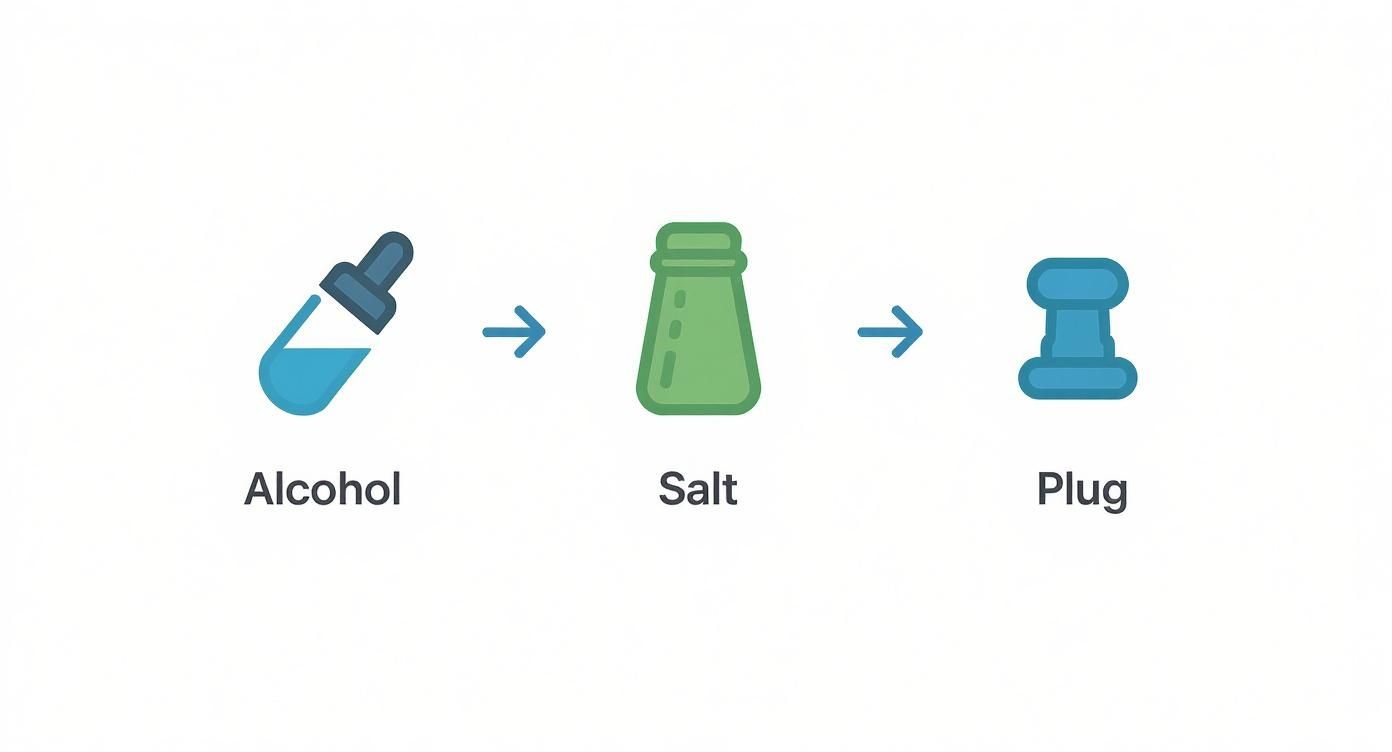
As you can see, the process relies on three things: a powerful solvent, a safe abrasive, and a way to seal everything up for a vigorous, mess-free shake.
Nailing the Perfect Clean
First things first, take your bong apart. Gently remove the bowl and downstem, as these smaller pieces need their own special attention. Give everything a quick rinse with warm water to knock loose any easy-to-remove debris. A word of caution: never use hot water on a cold glass bong, or you risk a heartbreaking crack from thermal shock.
Next, pour a good amount of coarse salt directly into the base of your bong. For a standard piece, maybe a quarter-cup is a good place to start. Follow it up with a healthy pour of 91% or 99% isopropyl alcohol—enough so the salt can swish around freely inside.
Now it's time to plug the openings. This is where dedicated bong plugs are a game-changer, but plastic wrap and rubber bands can work in a pinch. Seal the mouthpiece and the joint, get a firm grip, and start shaking. You’ll immediately see the alcohol turn a nasty shade of brown as it dissolves all that built-up gunk. Shake it vigorously for a couple of minutes, like you're mixing the world's least appealing cocktail.
While you're shaking the main piece, drop the bowl and downstem into a zip-top bag with their own bath of salt and alcohol. Let them soak, then give the bag a good shake too.
Once everything looks clean, pour out the dirty liquid (down the toilet is best) and rinse every component thoroughly with warm water until you can no longer smell any alcohol. Let it all air dry completely, and you’ll have a bong that looks and hits like new.
Material-Specific Cleaning Rules
It's crucial to remember that not all bongs are made from the same stuff. Your cleaning method has to match the material, or you could cause permanent damage.
-
Glass Bongs: These are the tanks of the bong world. Feel free to use the ISO and salt method as much as you need. Glass is non-porous and can handle the solvent and the vigorous shaking without any issues.
-
Silicone Bongs: Silicone is tough, but it can hang onto smells. The ISO and salt method is generally safe, but for deep-seated odors, a long soak in a silicone-safe cleaner or even a trip through the dishwasher (top rack only!) often works wonders.
-
Acrylic Bongs: This is the most important one: Do not use alcohol on acrylic! Isopropyl alcohol will degrade the plastic, causing it to become brittle, develop tiny cracks (crazing), and eventually fail. Stick to warm, soapy water or a cleaning product specifically made for acrylic. Coarse salt can also easily scratch the softer surface, so use a soft cloth instead.
Golden Rule: Alcohol is a best friend to glass and silicone but a mortal enemy to acrylic. Ignoring this is the quickest way to turn your favorite plastic piece into a piece of plastic.
Choosing Your Cleaning Method
With a few options on the table, it can be tough to decide which is right for your situation. This quick-glance table breaks down the pros and cons of each primary method to help you choose wisely.
| Method | Best For (Material) | Pros | Cons / Cautions |
|---|---|---|---|
| Isopropyl & Salt | Glass, Silicone | Extremely effective, affordable, readily available | Flammable, strong odor, NOT safe for acrylic, can leave salt in complex percs |
| Commercial Cleaners | All materials (check label) | Formulated for resin, often requires less shaking, specific formulas for different materials | More expensive, can contain harsh chemicals |
| Boiling / Steam | Glass (simple pieces), Silicone | Chemical-free, sanitizes effectively, great for loosening stubborn resin | Risk of thermal shock/cracking for glass, not ideal for complex pieces, burn hazard |
| Ultrasonic Cleaner | Glass, Silicone (small pieces) | Hands-free, reaches every nook and cranny, very thorough | Requires specialized equipment, not practical for large bongs |
Ultimately, the ISO and salt shake remains the go-to for most glass bong owners due to its raw effectiveness and low cost. But for specialty pieces or materials like acrylic, exploring other options is a smart move.
Alternative Tactics When Things Get Stubborn
Sometimes, a simple shake isn't enough, especially if it's been a while. When you're facing a real resin nightmare, you might need to call in the special forces.
Globally, cleaning habits vary quite a bit. In North America, 85% of users report using chemical cleaners like isopropyl alcohol, while in Europe, there's a growing trend towards eco-friendly solutions, with 35% of users opting for natural alternatives. Public health awareness has also shifted habits, with 70% of surveyed users in North America and Europe saying they clean their pieces more frequently due to health advisories. You can find more details about trends in the broader cleaning services market from reports by firms like The Insight Partners.
For those who prefer a less hands-on approach, specialized bong cleaners are a great option. Products from brands like Formula 420 or Randy's Black Label are designed to dissolve resin with minimal effort—often just a quick soak and rinse. They're especially handy for intricate bongs with multiple percolators where salt can get stuck.
Here's another pro-tip for glass: gently warm your isopropyl alcohol before using it. Just place the sealed bottle in a bowl of warm water for a few minutes. The slightly higher temperature seriously boosts its solvent power, helping it melt away even the most baked-on resin. Never, ever microwave alcohol or heat it near an open flame—it is extremely flammable. Seriously. Don't do it.
Tackling Stubborn Resin and Clogged Percolators
Sometimes, the good old alcohol and salt shake just doesn't cut it. We’ve all been there—staring at a bong so caked with resin it looks like an archeological find, or a honeycomb percolator so clogged it’s just a solid, sticky mess. This is where the real deep cleaning begins.
When you're up against grime that seems to mock your best efforts, it's time to pull out the bigger guns. Don't throw in the towel just yet. Even the most neglected piece can usually be saved; you just need a bit more patience and a few tricks up your sleeve.
The 'Soak and Poke' for Clogged Downstems
That hopelessly blocked downstem or bowl piece can feel like a lost cause. When a simple shake does nothing, the answer is usually a strategic combo of soaking and some gentle persuasion. I call it the 'soak and poke.'
First, give that stubborn part a long, deep soak in 99% isopropyl alcohol. I'm talking at least a few hours, but for the really bad ones, let it sit overnight. This extended bath is the key—it lets the alcohol work its way into the hardened resin and start breaking it down from the inside.
Once the gunk has softened up, it’s time to move on to the 'poke' part of the operation.
-
Your Toolkit: You'll want something long and thin, but not so sharp it'll scratch your glass. A standard pipe cleaner is my go-to. A straightened paperclip or even a wooden skewer can work in a pinch.
-
The Gentle Nudge: Carefully work your tool into the downstem and start gently pushing and twisting. You’re not trying to force it; you’re just helping to break up the now-softened resin. You should feel it start to give way pretty easily.
-
The Final Rinse: After you've cleared the major blockage, pop the piece back into a Ziploc bag with some fresh alcohol and salt. Now, give it one last, vigorous shake to knock loose any remaining debris.
This simple technique can resurrect a piece you thought was gone for good. It's saved many of my favorite bowls from an early retirement.
Unclogging Those Intricate Percolators
Percolators give you wonderfully smooth hits, but man, can they be a nightmare to clean. All those tiny holes and complex chambers are magnets for resin. Even worse, sometimes the salt crystals from your cleaning solution can get trapped inside, creating a whole new problem. This is where you have to get creative.
For those impossible-to-reach spots deep inside a complex perc, a regular brush just won't do. One of the best tools I've found for this is a magnetic scrubber. It’s a clever little gadget with two parts: a magnetic scrubber that goes inside the bong and a handle you use on the outside. You can guide the inner piece into every nook and cranny, scrubbing away spots you could never reach before. If you've ever stared at a stubborn stain inside your piece, you might want to check out something like the Blazy Susan Resin Blaster Magnetic Glass Scrubber.
Let the Machines Do the Work: Ultrasonic Cleaners
For those who'd rather skip the scrubbing entirely, technology has an answer: ultrasonic cleaners. These devices use high-frequency sound waves to create microscopic vibrations in the water, literally shaking the gunk and residue right off your glass. No elbow grease required.
These things are really catching on. In 2023, a single model of a countertop sonic cleaner sold over 12,000 units in the U.S. and Canada in its first year. It’s a hands-free, set-it-and-forget-it way to get a professional-level clean. In fact, recent surveys show that almost 45% of regular bong users are curious about automated cleaning devices, citing convenience and better hygiene as the main draws. You can see how fast this trend is growing by checking out the latest data on the growth of the pipe cleaning machine market.
Maintaining Your Sparkling Clean Bong
https://www.youtube.com/embed/65kSMAQaR2g
You’ve won the battle against that nasty resin, and your bong is looking brand new again. But don't celebrate just yet. The final steps are just as critical as the cleaning itself, and they set you up for easier upkeep and way better sessions down the road.
The job isn't finished just because you’ve poured out that gross, brown cleaning solution. Now it's time for the final, non-negotiable step: a thorough rinse.
The Crucial Final Rinse
After any cleaning session, especially if you used alcohol or a chemical cleaner, you need to rinse your piece like your tastebuds depend on it—because they do. Any leftover alcohol or cleaning agent can ruin the flavor of your next hit. Worse, lingering alcohol fumes can actually ignite, which is a surprise nobody wants.
Run warm water through every part of your bong, making sure to flush the main chamber, the downstem, and the bowl. Keep going until you can't smell even a hint of alcohol. A good rule of thumb is to rinse for at least twice as long as you think is necessary. It’s a simple step that guarantees your next session tastes pure and clean. Pro tip: if you have resin on your hands and you're trying to wash it off you will notice that the water is not helping. I recommend using a grease-cutting soap like the one they used on those ducks, lathering your hands in the soap without water, then using a towel to clean the resin off entirely before washing off the soap with warm water.
Drying Done Right
Once everything is rinsed, find a safe spot to let all the pieces air-dry completely. A dish rack or a soft towel on the counter works perfectly for this. Whatever you do, try to avoid drying the inside with paper towels; they tend to leave behind tiny lint particles that you’ll just end up inhaling later.
Patience is key here. A fully dry bong won't have any water spots and ensures no moisture is left behind to get funky before your next use.
Establishing a simple cleaning schedule transforms a major project into a quick habit. The goal is to never let your bong get to the "disaster" stage again.
Keeping your bong clean is an ongoing commitment, not a once-a-month panic-scrub. The real secret is building small habits into your routine. That way, the job always feels manageable, not monumental. It’s all about maintenance, not miracles.
Your Simple Bong Maintenance Schedule
You don’t need a complicated chart to keep your piece in top shape. It really just comes down to a few easy-to-remember rules. Think of it less as a chore and more as a ritual that respects your gear and, more importantly, your lungs.
Here’s a practical schedule that most regular users can stick to:
-
Daily Duty (30 seconds): Change your bong water. Every. Single. Day. This is the single most impactful habit you can build. Fresh water is your best defense against grime buildup and stops bacteria from throwing a party in your piece.
-
Quick Refresh (2 minutes): Every 2-3 sessions, give your bong a quick rinse with hot water (not boiling!) to wash away any fresh, loose resin. This simple flush keeps things from getting out of hand between your deep cleans.
-
Weekly Deep Clean (10-15 minutes): Once a week, set aside time for a full deep clean using your preferred method, like isopropyl alcohol and salt. Because you've been changing the water and doing quick rinses all week, this deep clean will be shockingly fast and easy. The resin simply won’t have a chance to harden into a stubborn, caked-on mess.
-
Bonus Tip: You can prevent the buildup of resin in your bong by adding specialized resin-blocking liquids. You add the drop to the water, shake the water around to coat the interior, and watch the resin struggle to cling to the surface.
Stick to this simple routine, and your bong will always be ready for a clean, flavorful session. You’ll find yourself spending way less time scrubbing and a lot more time enjoying the crystal-clear results of your efforts.
Your Burning Bong Cleaning Questions Answered
Let's clear the air on some of the most common questions that pop up when it's time to get your bong sparkling again. Even with the best instructions, you can run into a sticky situation. Here are some direct, no-nonsense answers to help you clean with confidence.
We'll tackle everything from the best cleaning solutions to banishing those stubborn, funky smells. Think of this as the final polish on your cleaning knowledge—soon enough, you'll be a pro.
Can I Really Use Just Salt and Alcohol on My Expensive Bong?
You absolutely can. In fact, it's often the method most glass artists and high-end brands recommend. The magic is in the combination: 91% or 99% isopropyl alcohol melts away the resin, while a coarse abrasive like Epsom or sea salt scrubs the gunk off without scratching your glass.
The real risk here isn't the cleaning solution, but how you handle the bong itself. Always be gentle, especially around delicate percolators or thin glass. I always recommend laying a towel down in the sink to create a soft surface, just in case things get slippery. Your bong is in your hands, literally.
My Bong Still Smells Weird After Cleaning. What Went Wrong?
Ah, the phantom funk. If your piece looks clean but still smells off, it's usually one of two culprits. Either some cleaning solution residue got left behind, or the smell has seeped into a rubber grommet or silicone part. That old bong water perfume can be surprisingly stubborn.
First, give it another really thorough rinse with warm water to flush out any leftover alcohol or cleaner. If the smell persists, take out any non-glass parts and soak them in a separate bath of warm water and a good squeeze of lemon juice. The citric acid is a natural deodorizer and works wonders.
The number one cause of lingering bad smells is old, stagnant water. The easiest way to prevent odors from ever setting in is to change your water daily. It's the simplest and most effective habit for a fresher experience.
- Abongham Blinkin
How Often Should I Actually Be Cleaning My Bong?
For the best flavor and a healthier session, consistency is key. You don't have to do a massive deep clean every day. Just stick to a simple routine, and you'll prevent the gunk from ever getting out of hand.
-
Daily: Change the water. It takes 30 seconds and makes the biggest difference. Seriously.
-
Every 2-3 Days: After you dump the old water, give it a quick swirl with hot water or a splash of alcohol to keep buildup at bay.
-
Once a Week: This is when you do your full deep clean using one of the methods in this guide. If you've kept up with the daily and mid-week rinses, this weekly clean will be a breeze instead of a major battle.
Is It Safe to Boil My Glass Bong to Clean It?
This is a high-risk, low-reward move that I almost always advise against, especially for the main body of your bong. Boiling can cause thermal shock—a fancy term for what happens when glass experiences a rapid temperature change. It can easily cause a crack or, even worse, shatter your piece completely.
If you're going to try this, only do it with small, sturdy borosilicate glass parts like a downstem or bowl. And even then, you have to be careful. Place the part in cool water, bring it to a boil slowly, kill the heat, and let it cool all the way down in that same water. Never drop a hot piece into cold water or vice-versa.
Honestly, a long soak in 99% isopropyl alcohol is a much safer bet for tackling tough, caked-on resin. It might take more time, but your bong will thank you for not giving it a potentially fatal hot tub experience.
Keeping your gear in top condition is the key to an amazing experience, and Autobongs is here to make that easy. From the best cleaning supplies to stunning new pieces, we offer a curated selection with straightforward guidance so you can shop with confidence. Explore our collection and find everything you need at https://www.autobongs.com.